

Special Pumps for Fire Protection, Hot Oil and Flood Response
Four pump groups for distinct duties: industrial fire-water systems, portable high-pressure fire response, high-temperature heat-transfer oil and flood-water removal. Explore each application and the data needed to specify the right equipment.
Petropedam product photograph. This image illustrates the equipment class, not a specific delivered unit.
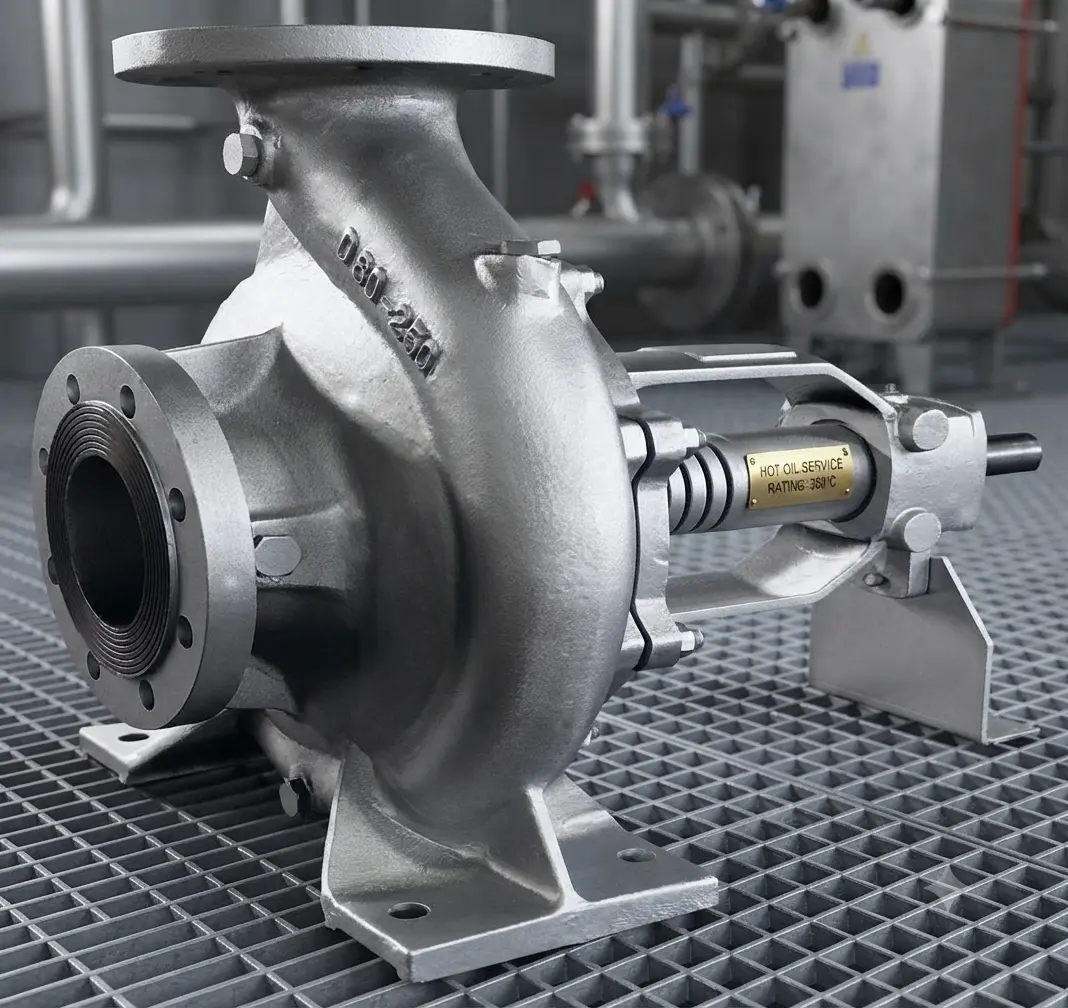
Petropedam product photograph — hot-oil centrifugal pump.
Hot Oil Centrifugal Pump
Circulates or transfers high-temperature heat-transfer oil in systems such as chemical processing, power generation and oil and gas facilities. Selection is based on the fluid properties at the actual operating temperature, not ambient data.
Published limits
What to consider
- Thermal expansion: casing, shaft and supports are sized so the pump starts, runs and shuts down without mechanical binding at operating temperature.
- Materials and seals: wetted materials and sealing arrangement must be compatible with the heat-transfer oil chemistry at its working temperature.
- Hot commissioning: startup procedures must bring the pump and casing to operating temperature before full flow is applied.
- Fluid properties at temperature: viscosity, density and vapour pressure change with temperature and drive the hydraulic selection.
Scope note: heat-transfer oil service is not automatically suitable for crude oil or other hydrocarbon mixtures. Each fluid requires its own review.
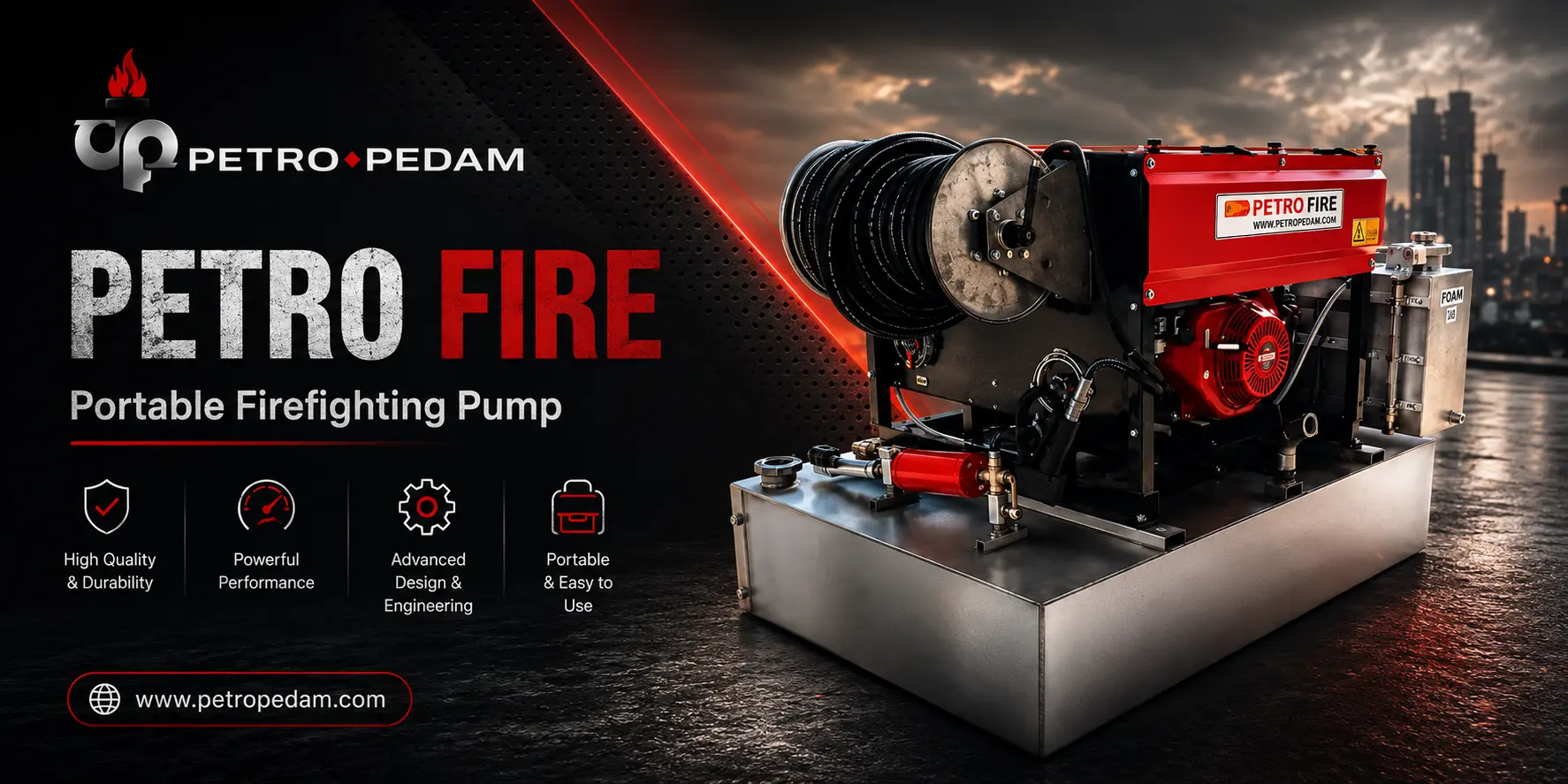
Petropedam product photograph — portable Petro Fire water-mist unit.
Portable Petro Fire Water-Mist Reciprocating Pump
A portable, gasoline-engine-driven reciprocating package with a gearbox, intended for high-pressure fire-suppression duty where the unit must be moved to the point of use. It is a field-portable device, not a fixed installation.
Published limits
What to consider
- Portable deployment: unit weight, mobility and setup time matter as much as pump output.
- High-pressure water mist: performance depends on the pump, hose, nozzle and the water supply feeding the unit.
- Foam capability: foam service is possible only if the actual pump, dosing system and nozzle configuration support it. It cannot be assumed.
- Fire class suitability: no single portable unit is effective for every fire class or every industrial or residential scenario.
Scope note: this portable package is not an NFPA 20 fire pump. NFPA 20 addresses stationary fire pumps with a defined driver, controller and test scope. The two are separate and are specified separately.
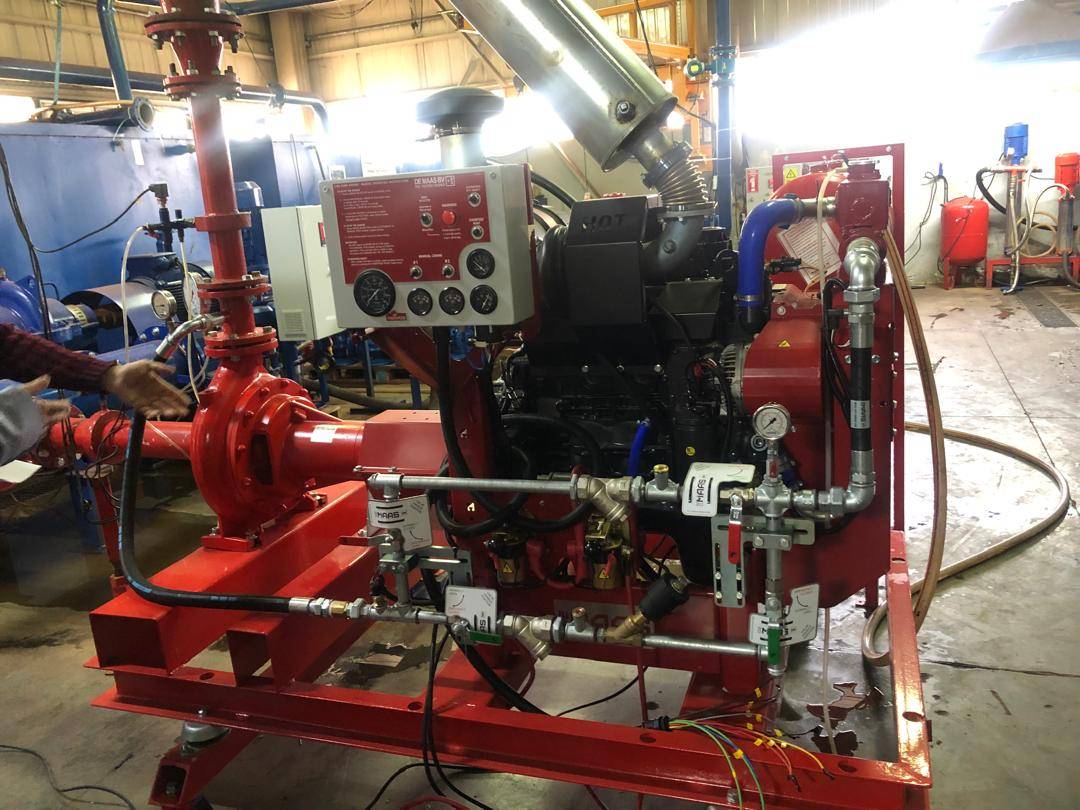
Petropedam-supplied photograph — stationary fire-water pump package.
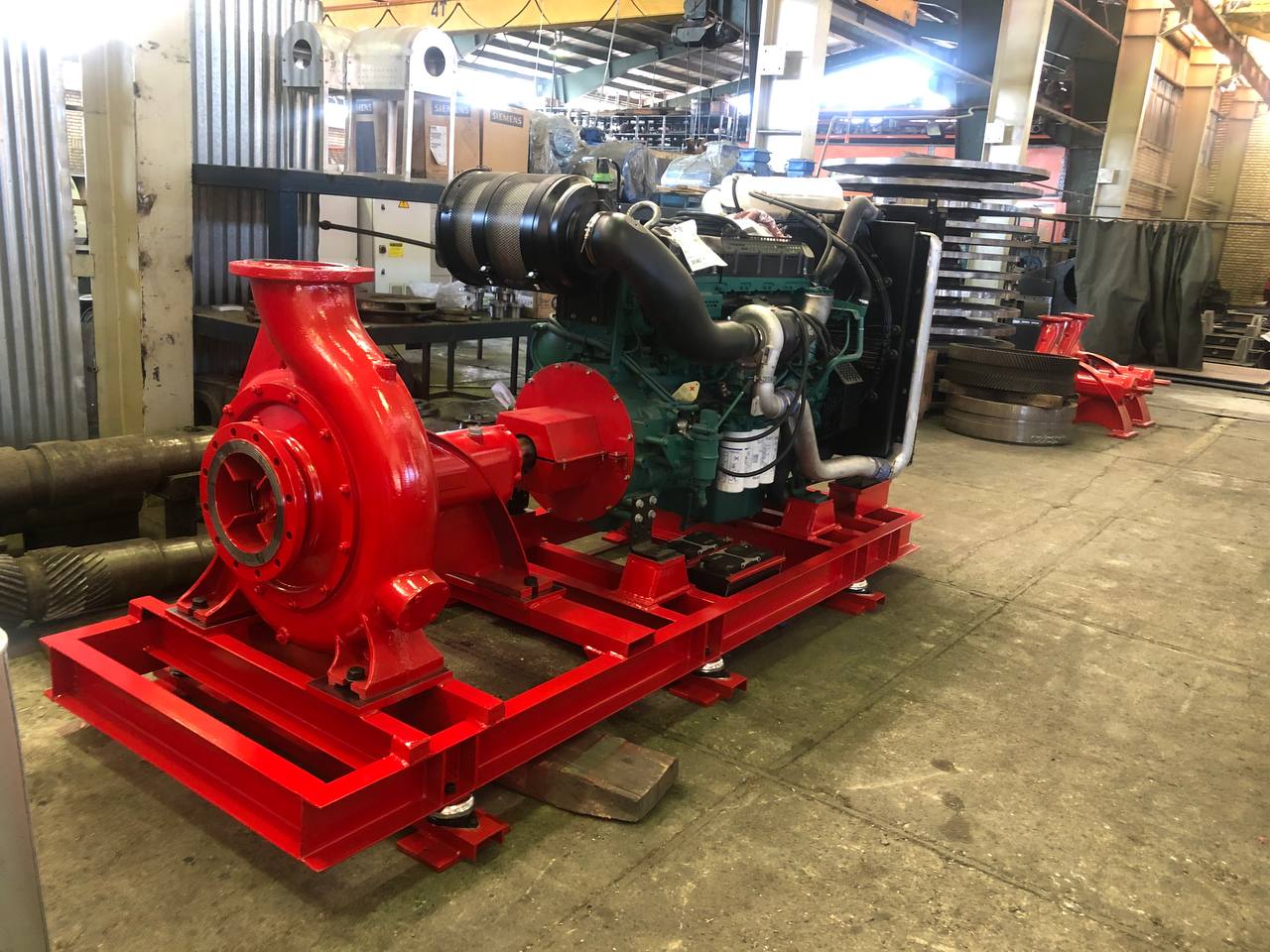
Installation detail photograph supplied by Petropedam.
Stationary Fire Pump Package for Oil & Gas Projects
An industrial fire-water pump package for oil and gas facilities, designed around each project's fire-protection requirements and the applicable NFPA 20 criteria. Unlike the portable unit above, this is a fixed installation that forms part of the facility's fire-protection system.
What the package includes
- Pump end: fire-water pump matched to the required flow and pressure at the system design point.
- Driver: electric motor or diesel engine, selected to the site's power availability and reliability requirements.
- Controller: sized and configured for the driver type and the project's control philosophy.
- Installation and testing scope: foundation, suction and discharge piping, relief, and site acceptance testing, all evaluated for the specific project.
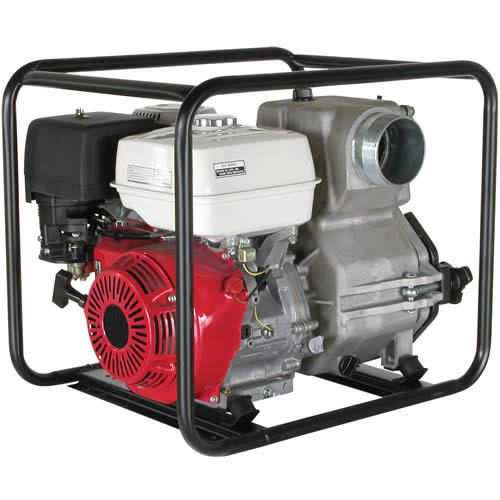
Petropedam product photograph — trash / flood centrifugal pump.
Trash Flood Centrifugal Pumps
Portable centrifugal pumps for flood response and removal of accumulated water. Used where rapid deployment and reliable water removal matter more than high discharge pressure. Typical duty includes clearing flooded areas, dewatering pits and moving water containing modest amounts of solids and debris.
Available options and published limits
Reference supplied by Petropedam for flood-response use of this pump class.
Cumulative production figure reported by Petropedam for the trash / flood centrifugal pump line.
What to confirm before selection
- Model and approved curve: exact 2", 3" or 4" size, its discharge curve, and the actual performance at the site's static and dynamic head.
- Solids passage and water quality: maximum particle size and debris content must be compatible with the selected pump's passage design.
- Priming method: priming arrangement, suction hose length and vertical lift affect whether the pump performs as expected at the site.
- Scope of use: the trash / flood pump is intended for water removal. It is not marketed as a firefighting pump.
The four special pump groups at a glance
A short reference view. Reported limits are published values and are not achieved simultaneously at a single duty point.
| Product | Service | Drive / Arrangement | Published Limits | Key Selection Check |
|---|---|---|---|---|
| Hot Oil Centrifugal Pump | High-temperature heat-transfer oil circulation and transfer | Centrifugal; electric motor (per project) | Max flow 250 m³/h · Max pressure 8 bar · Max operating temperature up to 350 °C | Fluid properties at operating temperature, thermal expansion, materials, seals and hot commissioning |
| Portable Petro Fire Water-Mist Reciprocating Pump | Portable high-pressure water-mist fire suppression | Gasoline engine with gearbox; portable reciprocating package | Max flow 2,000 L/h (2 m³/h) · Operating pressure approx. 180–200 bar | Exact rated vs. max pressure on the datasheet, hose and nozzle set, and whether foam is supported |
| Stationary Fire Pump Package for Oil & Gas | Fixed fire-water system for oil and gas facilities | Fixed installation; electric or diesel driver, dedicated controller | Project-specific. Performance, driver and controller are confirmed in the project documentation. | Project fire-protection requirements, driver and controller selection, installation and site acceptance testing under the applicable NFPA 20 criteria |
| Trash Flood Centrifugal Pumps | Flood response and removal of accumulated water | Portable centrifugal; engine driven | Sizes 2", 3", 4" · Engine up to 13 hp · Max flow 120 m³/h · Max pressure 2.8 bar | Approved curve for the chosen size, solids passage, priming method and site head |
How to specify your duty
Send the inputs below so the engineering team can recommend a pump configuration and the documents needed to confirm it. Not every question applies to every product — include the ones relevant to the group you are asking about.
Inputs to send
- Flow: required duty flow, with minimum and maximum expected values.
- Pressure or head: required discharge pressure or total head at the duty point, including static and dynamic components.
- Liquid and temperature: fluid type (heat-transfer oil, water with debris, fire-water), operating temperature, and any chemical composition that affects materials.
- Power source: electric supply characteristics, diesel availability, or gasoline-engine portability, as applicable to the product group.
- Installation type: fixed or portable; suction arrangement; site elevation and lift.
- Project location: site conditions, ambient temperature and any environmental or hazardous-area constraints.
- Fire-system requirements (if relevant): applicable codes, required redundancy, controller philosophy and any client-specified test scope.
Distinctions that matter
Is the portable water-mist pump the same as an NFPA 20 fire pump?
No. They serve different arrangements. The portable Petro Fire package is a field-portable, gasoline-engine-driven reciprocating unit intended for high-pressure water-mist duty. NFPA 20 addresses stationary fire pumps with a defined driver, controller and test scope. The two are specified separately, and the portable unit is not described as NFPA 20 compliant.
Can the hot-oil pump be used for crude oil or other hydrocarbons?
Not automatically. Heat-transfer oil service is a distinct duty. Crude oil and other hydrocarbon mixtures have different viscosity, vapour pressure and chemical properties at operating temperature, and each requires its own selection review.
Does the trash pump achieve its maximum flow, maximum pressure and maximum engine power at the same time?
No. The 120 m³/h flow, 2.8 bar pressure and 13 hp power are published upper values for the range. Each 2", 3" and 4" size has its own approved curve. Selection must be based on the curve of the chosen size at the actual duty point.
Can the portable water-mist pump be used with foam?
Only if the actual pump, dosing system and nozzle configuration support foam. Foam capability is not assumed; it must be confirmed as part of the fire-system design.
How can I confirm NFPA 20 compliance for the stationary package?
Compliance is confirmed at the project level against the applicable NFPA 20 criteria, using the actual package documents — pump curve, driver data, controller configuration, installation drawings and site acceptance test records. It is not established by marketing text or by a photograph.
Bring us your special-pump duty.
Share the service, flow, pressure or head, fluid, temperature and site conditions. We will review the application and the documentation required for a responsible equipment recommendation.