


Special pumps.Purpose defines
the package.
Four distinct applications. Explore hot-oil circulation, portable Petro Fire, stationary fire-water systems and flood-response pumps—then define the equipment around your duty.
Different duties.
Different requirements.
Heat-transfer oil circulation, portable fire response and a fixed fire-water system need different equipment and documentation. Start with the application before comparing performance.
Hot oil
Operating temperature, fluid properties and thermal behaviour.
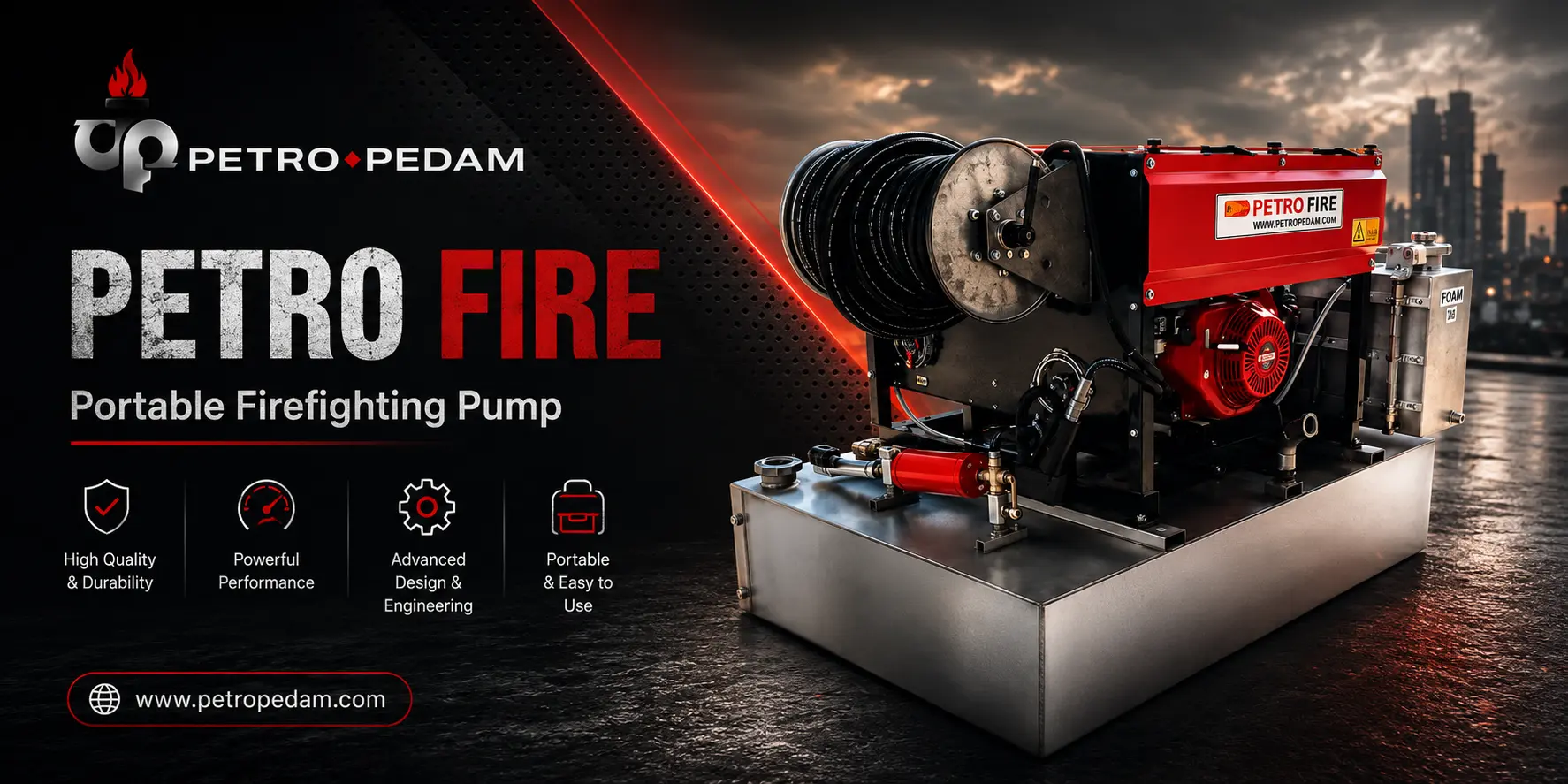
Explore this group ↓Petro Fire
Pump, hose, nozzle and water supply as one configuration.
Explore this group ↓Stationary package
Pump, driver, controller and installation requirements.
Explore this group ↓Trash & flood
Site head, priming, debris and deployment conditions.
Explore this group ↓Find the right starting point.
The limits below are retained from the company’s published page. Confirm the current datasheet and curve for the selected model; individual maxima do not define one operating point.
 View full image ↗
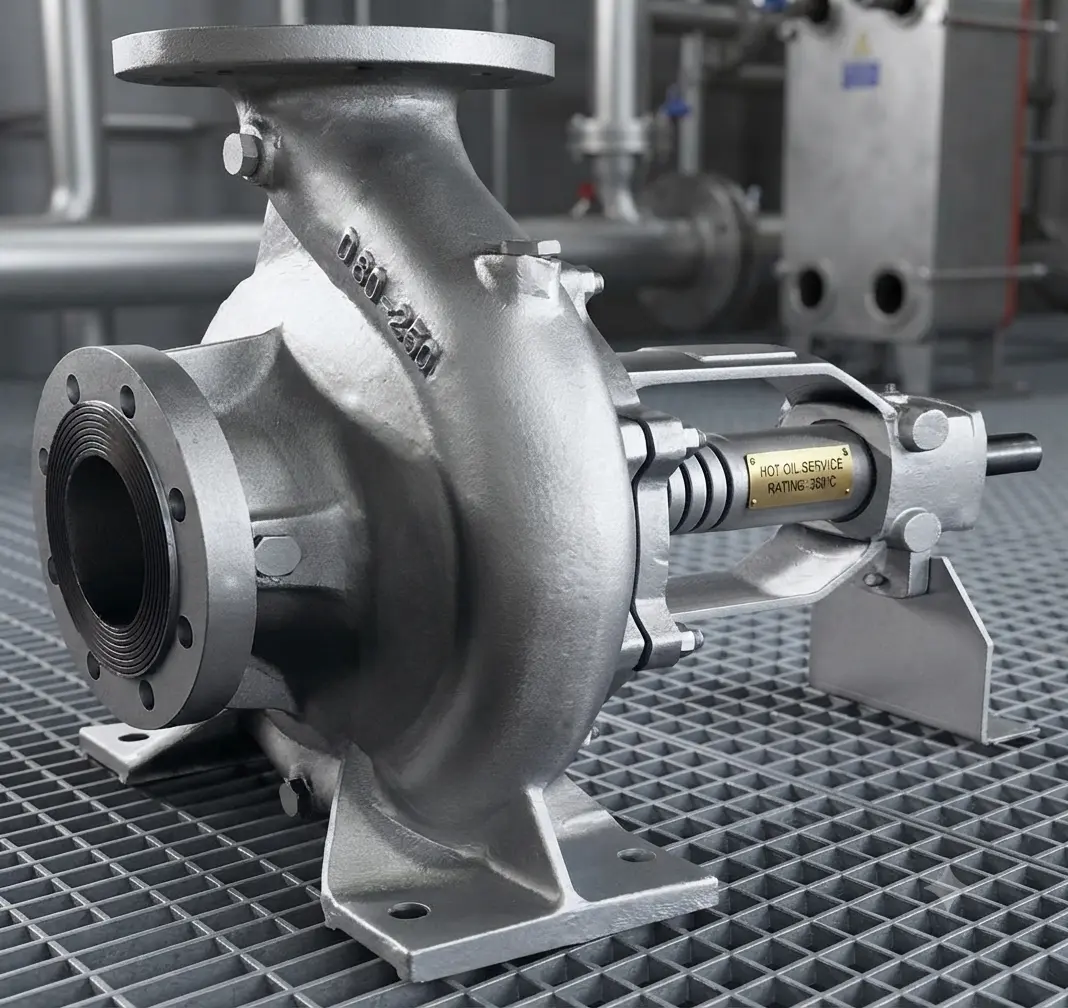
Hot oil centrifugal pumps
Circulate heat-transfer oil with selection based on the fluid properties at operating temperature. Review thermal behaviour, seal arrangement and the required duty curve together.
Engineering & specification notes
Confirm oil chemistry, hot and cold viscosity, density, vapour pressure, expansion, piping loads and the manufacturer’s warm-up procedure. Heat-transfer oil suitability does not automatically establish suitability for crude oil or another hydrocarbon mixture.
View full image ↗Portable Petro Fire water-mist unit
A gasoline-engine-driven, high-pressure reciprocating package with gearbox for portable fire-response applications. Assess the complete pump, hose, nozzle and water-supply arrangement.
Engineering & specification notes
Confirm exact rated and maximum pressures, mobility, water supply and the approved hose/nozzle combination. Fire-class suitability and foam capability depend on the tested configuration. This portable unit is separate from a stationary NFPA 20 installation.
 View full image ↗
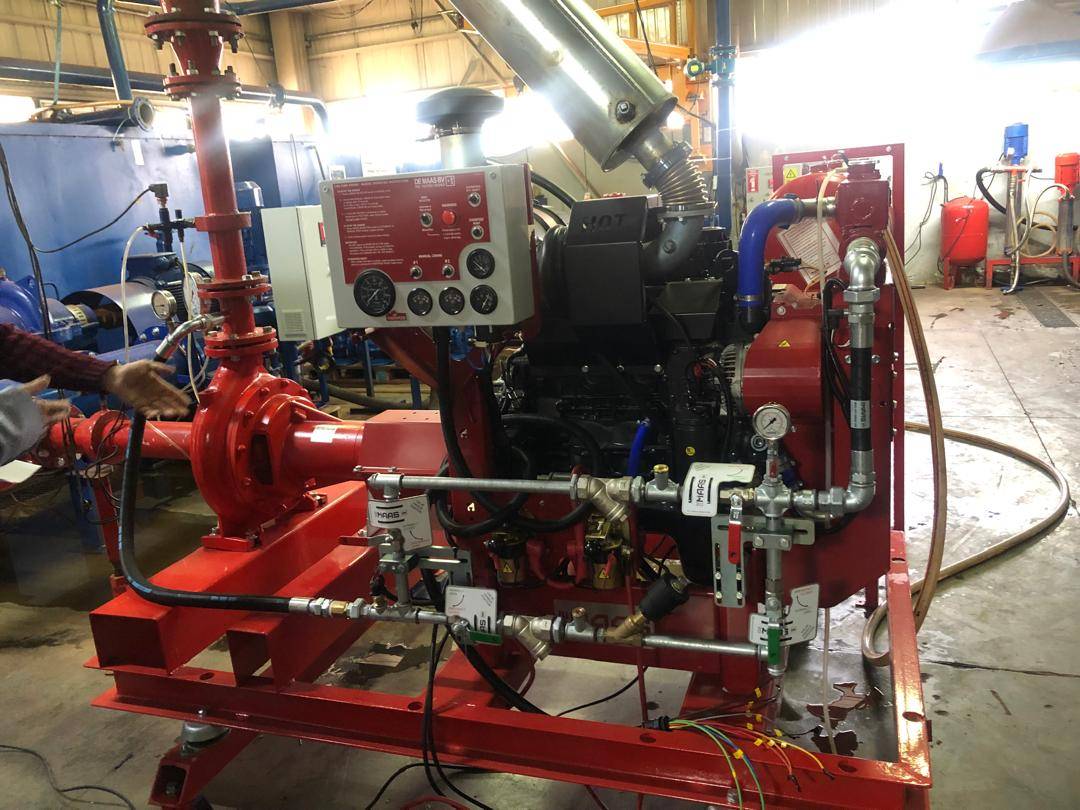
Stationary fire-water pump packages
A project-specific fire-water package for a fixed installation. Define the pump, electric or diesel driver, controller and installation around the facility’s fire-protection requirements.
Engineering & specification notes
Specify the applicable NFPA 20 edition and local requirements with the project team. Verify performance curves, driver and controller data, installation drawings and acceptance tests. A product photograph does not establish listing, certification or installed-system compliance.
 View full image ↗
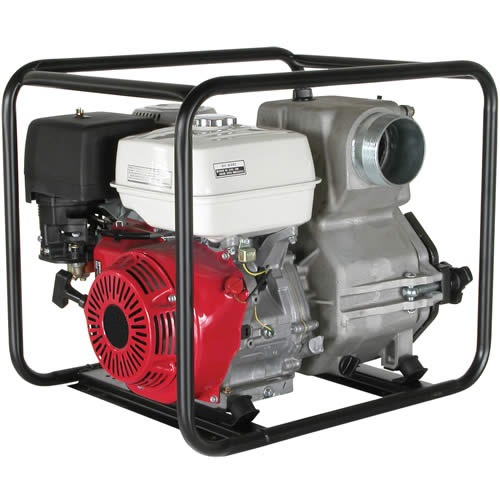
Trash & flood centrifugal pumps
Portable engine-driven pumps for flood response, pit dewatering and accumulated-water removal. Match the selected size to site head, suction lift, priming conditions and the expected debris.
Engineering & specification notes
Confirm the model-specific curve, solids passage, suction-hose arrangement and priming method. The range maxima are not one simultaneous duty point. This is water-removal equipment; it is not presented as a firefighting pump.
Compare the four application groups
Application guide, not a substitute for an approved curve. Scroll the table horizontally on a small screen.
| Group | Primary duty | Arrangement | Key confirmation |
|---|---|---|---|
| Hot oil | Heat-transfer oil circulation | Centrifugal, project-specific driver | Hot fluid properties, seals, thermal expansion and duty curve |
| Portable Petro Fire | High-pressure water-mist response | Portable gasoline-driven reciprocating package | Approved hose/nozzle set, pressure rating and fire-class suitability |
| Stationary fire-water | Fixed facility fire protection | Pump, electric or diesel driver and controller | Applicable project codes, installation and acceptance testing |
| Trash & flood | Flood and accumulated-water removal | Portable engine-driven centrifugal pump | Size-specific curve, site head, debris passage and priming |
See the equipment in use.
The existing training video is retained as an operation overview. Follow the instructions and application limits for the actual supplied unit.
Portable fire-response package.
Review deployment, water supply and the pump-and-nozzle arrangement with the technical team. Request the current operating instructions for the selected configuration.
Open the training video · MP4 ↗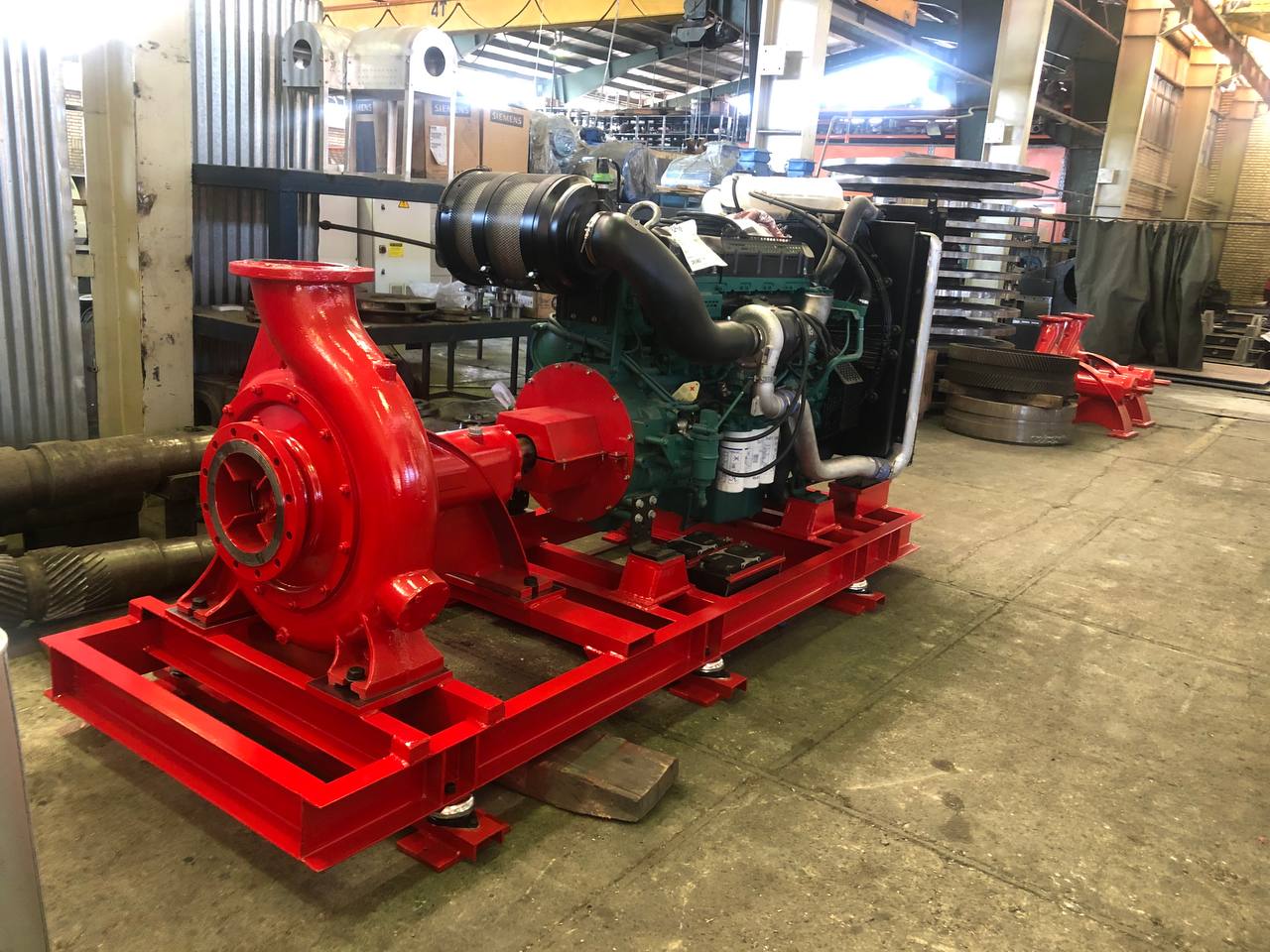
Confirm the complete installation.
Review foundation, suction and discharge piping, driver, controller and test scope against the project requirements.
Discuss installation requirements ↗Trash & flood pump experience.
The existing company page identifies the Iranian Red Crescent Society as a client reference and reports cumulative production of 1,000+ trash / flood units. These are company-reported statements, separate from model-specific performance data.
Explore project references ↗Define the duty.
Then define the package.
Send the inputs relevant to your application. The required documents and tests differ between heat-transfer equipment, portable units and fixed fire-protection systems.
- 01 · Service & liquidApplication, fluid chemistry, temperature range and solids or debris where present.
- 02 · Flow & headNormal and expected operating range, required pressure or total head, and pipework data.
- 03 · Suction conditionsWater source, liquid levels, suction lift, inlet losses and available NPSH where applicable.
- 04 · Driver & utilitiesElectrical supply, diesel or gasoline requirements, starting method and site conditions.
- 05 · Deployment & accessFixed or portable arrangement, dimensions, mobility, maintenance access and environmental constraints.
- 06 · Project requirementsApplicable codes, certification or listing requirements, controls, testing and required documentation.
Questions before specification.
Is the portable Petro Fire unit the same as a stationary fire pump?
No. The portable high-pressure water-mist package is a separate application. NFPA 20 addresses stationary pumps for fire protection; the fixed system’s pump, driver, controller, installation and testing must be reviewed against the applicable project requirements.
Can the hot-oil pump handle crude oil or another hydrocarbon?
Do not infer suitability from the hot-oil description alone. Confirm the actual liquid, temperature, viscosity, vapour pressure, chemistry, materials and sealing arrangement for the selected pump.
Are maximum flow and maximum pressure achieved together?
Not necessarily. The published maxima describe individual range limits. Use the approved curve for the identified model, speed and impeller at the actual duty point.
Does Petro Fire support foam or every fire class?
Confirm the tested pump, dosing system, hose and nozzle configuration. Foam capability and fire-class suitability must be established for that specific arrangement.
How is stationary-package compliance confirmed?
Specify the applicable code edition, local requirements and any required listing or certification. Review the approved curve, driver and controller data, installation drawings and acceptance-test records with the responsible project team.
What does your application need?
Share the service, liquid, flow, head and site conditions. Start a focused discussion about the pump and its supporting equipment.
Explore all pump families ↗ · Final suitability and operating limits depend on the selected model and approved project data.